
Teaching Kids to Name Big Feelings: A Parent's Guide to Emotional Regulation
The supermarket meltdown. The slammed door. The tears over a broken biscuit. Big feelings are a normal part of childhood, but young children do not yet have the words or brain skills to manage them alone. The good news is that emotional regulation can be taught, and it starts with helping your child put a name to what they feel. Here is a practical guide for parents in Smithfield, Fairfield, Auburn, Parramatta, and across Western Sydney.
Why Naming Feelings Works
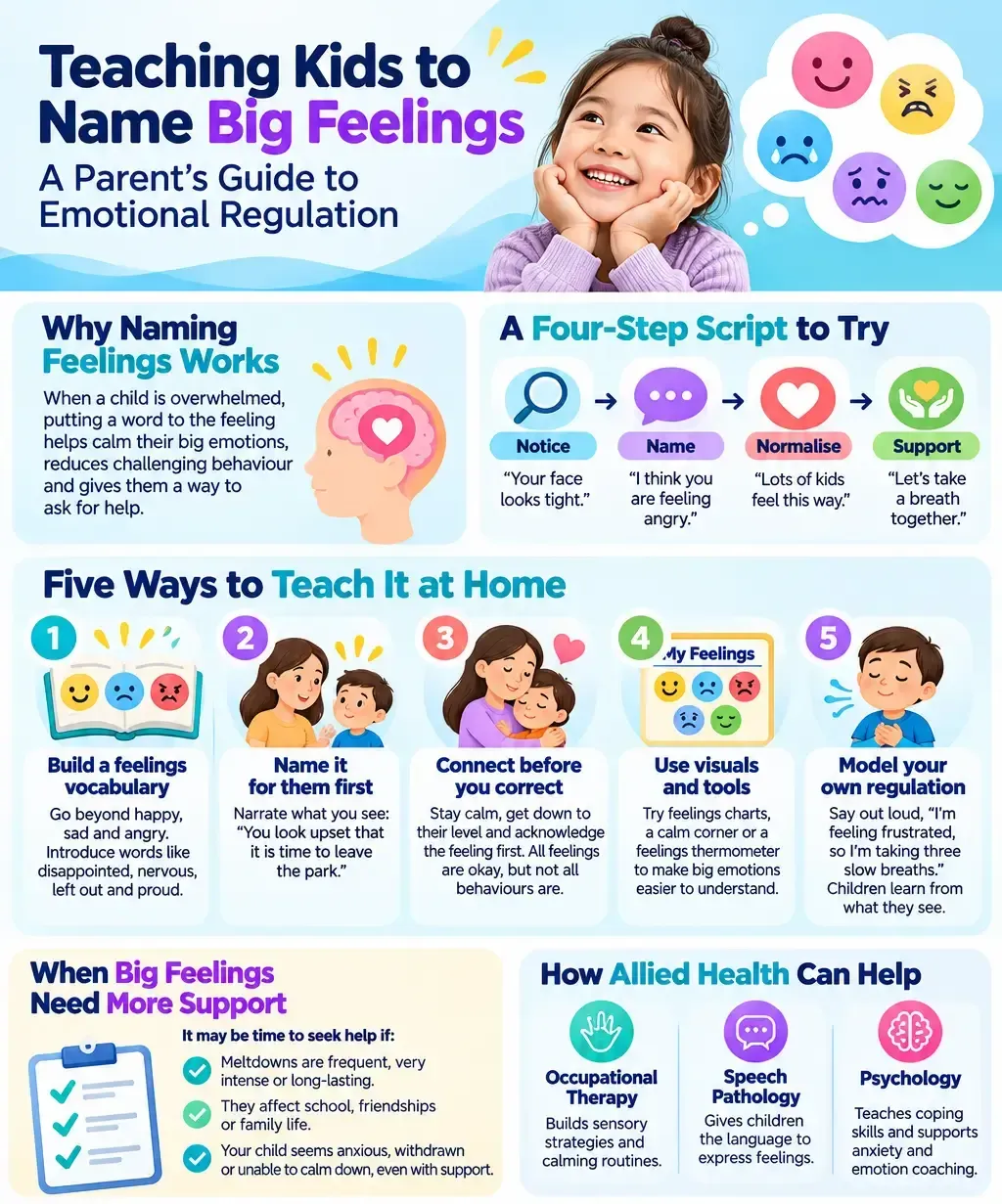
When a child is overwhelmed, the thinking part of the brain steps back and the emotional part takes over. Putting a word to a feeling, often called "name it to tame it", helps settle that response and gives your child a way to ask for help. A child who can say "I'm frustrated" is less likely to show it through hitting, yelling, or shutting down. Regulation is a skill built over years with your support, not a test of good behaviour.
Five Ways to Teach It at Home
- Build a feelings vocabulary: Go beyond happy, sad and angry. Introduce words like disappointed, nervous, left out and proud during books, shows and everyday moments.
- Name it for them first: Narrate what you see: "You look upset that it is time to leave the park." This shows your child that feelings are safe and understood.
- Connect before you correct: Stay calm, get down to their level and acknowledge the feeling first. All feelings are okay, but not all behaviours are, and advice lands best once your child feels heard.
- Use visuals and tools: Feelings charts, a calm corner with cushions, or a simple feelings thermometer make big emotions easier to point to, especially for younger children or those with limited language.
- Model your own regulation: Say out loud, "I'm feeling frustrated, so I'm taking three slow breaths." Children learn more from what they see than from what they are told.
A Four-Step Script to Try Tonight
- Notice: "Your face looks tight."
- Name: "I think you are feeling angry."
- Normalise: "Lots of kids feel this way."
- Support: "Let's take a breath together."
When Big Feelings Need More Support
Every child has hard days. It may be time to seek help if meltdowns are frequent, very intense or long-lasting, affect school, friendships or family life, or if your child seems anxious, withdrawn or unable to calm down even with support. Regulation can be harder for children with ADHD, autism, sensory differences or language delays. That is not a parenting failure. It simply means they may need different tools.
How Allied Health Can Help
- Occupational therapy: Builds sensory strategies and calming routines through occupational therapy.
- Speech pathology: Gives children the language to express feelings through speech pathology.
- Psychology: Teaches coping skills and supports anxiety and emotion coaching with psychology.
We work with families in Smithfield, Fairfield, Auburn and Parramatta, building plans that fit your child and your home.
If big feelings are taking over your home, you do not have to manage alone. Contact our friendly team or visit us in Smithfield or Guildford, and we will help you find the right support.
Frequently Asked Questions
At what age can I start teaching my child to name feelings?
You can start in the toddler years with simple words like happy, sad, and mad, and add more as their language grows. Naming feelings for your child, even before they can speak, helps lay the foundation.
Is it normal for my school-aged child to still have meltdowns?
Yes, it is common. What matters is how often they happen, how intense they are, and how much they affect daily life. If they are ongoing, speak with your GP or an allied health professional.
What if my child cannot or will not talk about feelings?
Try pictures, feelings cards, drawing, play, or body clues such as "my tummy feels tight". A speech pathologist or occupational therapist can suggest tools that suit your child.
Can allied health help with emotional regulation?
Yes. Occupational therapists, speech pathologists, and psychologists all support regulation in different ways. If your child has an NDIS plan, these supports may be funded when they link to your child's goals.