Hydrotherapy for Children: What Happens in a Session and Who Benefits
Water has a special way of making movement feel easier. For many children, a warm pool is where they move more freely, build strength and simply have fun, all while working towards important therapy goals. If you have heard about hydrotherapy but are not sure what it involves, this guide explains what happens in a session and which children may benefit. Our team supports families across Western Sydney, including Smithfield and Guildford.
What Is Hydrotherapy for Children?
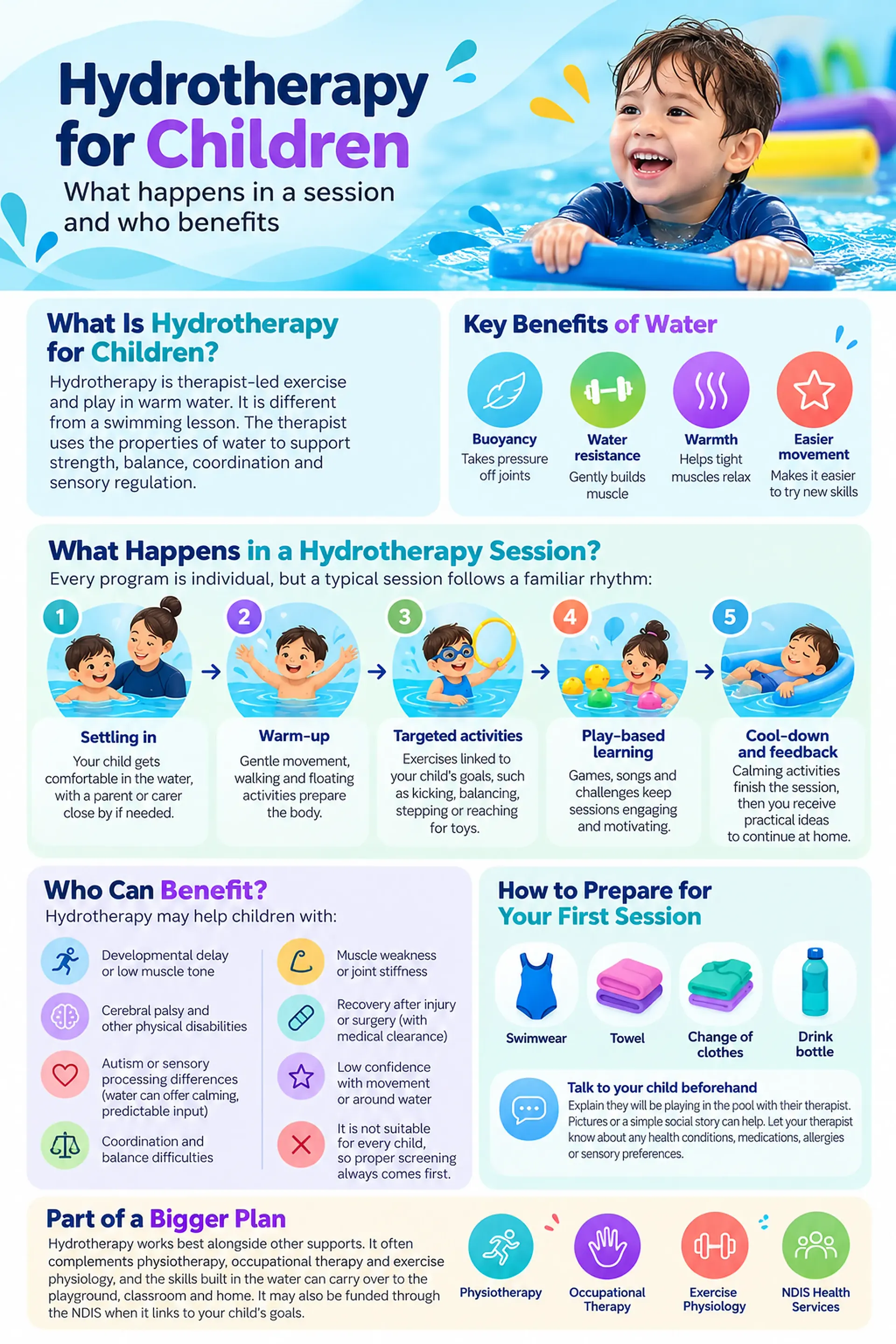
Hydrotherapy is therapist-led exercise and play in warm water. It is different from a swimming lesson. Rather than teaching strokes, the therapist uses the properties of water to work on strength, balance, coordination and sensory regulation. Buoyancy takes pressure off joints, water resistance gently builds muscle, and warmth can help tight muscles relax. This makes it easier for children to try movements that feel difficult or uncomfortable on land. You can read more about our hydrotherapy services on our service page.
What Happens in a Hydrotherapy Session?
Every program is individual, but a typical session follows a familiar rhythm:
- Settling in: Your child gets comfortable in the water, with a parent or carer close by if needed.
- Warm-up: Gentle movement, walking, and floating activities prepare the body.
- Targeted activities: The therapist guides exercises linked to your child's goals, such as kicking, balancing, stepping against water resistance, or reaching for toys.
- Play-based learning: Games, songs, and challenges keep sessions engaging and motivating.
- Cool-down and feedback: Calming activities finish the session, then you receive practical ideas to continue at home.
Before starting, your therapist completes an assessment, sets goals with you, and checks that hydrotherapy is safe for your child.
Who Can Benefit?
Hydrotherapy may help children with:
- Developmental delay or low muscle tone
- Cerebral palsy and other physical disabilities
- Autism or sensory processing differences, where water can offer calming, predictable input
- Coordination and balance difficulties
- Muscle weakness or joint stiffness
- Recovery after injury or surgery, with medical clearance
- Low confidence with movement or around water
It is not suitable for every child, which is why proper screening always comes first.
How to Prepare for Your First Session
Pack swimwear, a towel, a change of clothes, and a drink bottle. Talk to your child beforehand and explain that they will be playing in the pool with their therapist. Pictures or a simple social story can make the experience feel predictable. Let your therapist know about any health conditions, medications, allergies, or sensory preferences so the session can be tailored to your child.
Part of a Bigger Plan
Hydrotherapy works best alongside other supports. It often complements our physiotherapy, occupational therapy and exercise physiology services, and the skills built in the water can carry over to the playground, classroom and home. Depending on your child's plan, it may also be funded through the NDIS when it links to their goals. Explore our NDIS health services to see how our team can help.
Curious whether hydrotherapy could suit your child? Contact our friendly team or find us in Smithfield or Guildford, and we will talk through the next steps together.
Frequently Asked Questions
Does my child need to know how to swim?
No. Hydrotherapy is not about swimming ability. The therapist provides close support and, where needed, flotation aids to keep your child safe and comfortable.
How long is a session, and how often should my child attend?
Session length and frequency depend on your child's goals, energy levels, and plan. Your therapist will recommend a schedule after the initial assessment and review it as your child progresses.
Is hydrotherapy safe for children with medical conditions?
Often yes, with the right planning, but it is not suitable for every child. Your therapist will review your child's health history first and may ask for medical clearance from your GP or specialist.
Can hydrotherapy be funded through the NDIS?
It may be if it is reasonable and necessary and linked to your child's goals. Funding depends on the individual plan, so check with your planner or support coordinator.